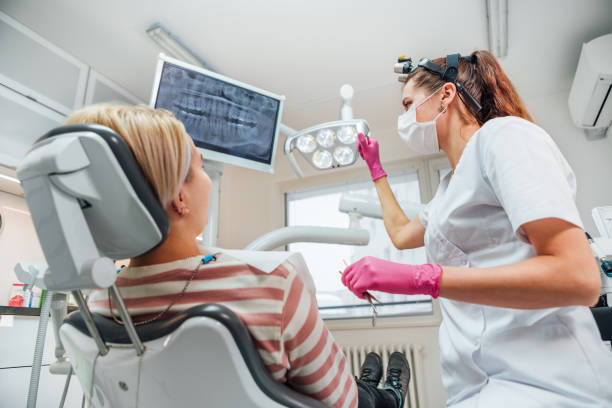

In Manama, you don’t run a clinic in one language. You run it in the language your patients walk in with. Some days that’s Gulf Arabic. Some days it’s English. Often it’s both in the same sentence. And for a busy clinic, that complexity shows up in one place every single time: documentation.
The short version
Marina Horizon Clinic introduced Plato MedScribe in early 2025 to reduce documentation drag in multilingual consultations without turning adoption into an IT project. In four weeks, the clinic saw faster note completion, smoother daily flow, and fewer follow-up calls caused by unclear instructions.
- Editing time after visits: 9 minutes to 3 minutes per patient
- Same-day note completion: 60 percent to 88 percent
- Daily capacity: up 6 percent without extending clinic hours
- Clarification calls: down 16 percent after patient-friendly summaries
A clinic built on many languages
Walk into the waiting area on a weekday evening and you’ll hear the real soundtrack of Bahrain’s private healthcare. A Bahraini patient speaking fast in local dialect. A Sudanese patient with different phrasing. A doctor switching between Arabic and English clinical terms without even noticing. A nurse translating instructions into English for a family member who’s helping the patient.
The clinical work is normal. The documentation is where the friction shows up. Notes get delayed, details get simplified, and the end of the day gets longer than it should be.
The person who had to approve it: Dr Kareem Al Mansouri
Dr Kareem Al Mansouri leads Marina Horizon Clinic. He has seen plenty of tools that look great in a demo and fall apart on day one.
His concern wasn’t “can software write a note.” His concern was “can it handle real Arabic and real clinic pace, without slowing anyone down.”
Two rules before the pilot
Dr Kareem agreed to test Plato MedScribe, but only if it met two rules that matter in a GCC clinic.
- It must understand Arabic as it’s actually spoken including dialect variation and mixed Arabic-English phrasing.
- It must not require heavy setup because the clinic does not run like a hospital IT department.
The demo that settled the question
Instead of a scripted walkthrough, the clinic ran a real consultation. The doctor spoke naturally. Fast pace. Local phrasing. English medical terms where they belong.
When the visit ended, Plato generated a structured note immediately. Clean sections. Correct terminology. And the part that surprised Dr Kareem most: it sounded like the doctor’s style, not a generic template.
He asked for a harder test, with more code-switching and a different dialect tone. The output held up again.
Rolling it out without making it a “project”
The pilot started with four clinicians across different visit types: two family medicine doctors, one internal medicine specialist, and one visiting consultant. The routine was simple: start the visit, stop at the end, review, and place the note into the patient record with minimal steps.
By the end of week one, nobody was “learning” it anymore. They were using it the way they use anything that works: quietly, consistently, without fanfare.
The numbers after four weeks
Less time spent fixing notes
Before Plato, doctors were spending about 9 minutes per patient finishing documentation, often pushing notes into lunch breaks or evenings. After four weeks, average editing time dropped to about 3 minutes per patient, mostly review and quick edits.
Same-day completion became the default
Before the pilot, about 60 percent of notes were completed before clinicians left. By week four, that number reached 88 percent.
More appointments without longer hours
When documentation stops squeezing the gaps between appointments, the day moves differently. Participating clinicians increased daily appointment capacity by 6 percent without extending clinic hours.

The front desk metric that never lies
The clinic’s reception team noticed something before leadership did. When patients leave uncertain, they call back. And those calls cost time, mood, and momentum.
The clinic began sending patient-friendly summaries for medication changes and chronic care plans. Patients received clear next steps they could refer to at home.
Within a month, clarification calls dropped by 16 percent for the clinicians using Plato. When calls did happen, staff resolved them faster because the summary reduced guesswork.
EHR fit in Bahrain: keep the system, improve the documentation
The clinic did not want an EHR replacement. It wanted documentation that fits into what the clinic already uses.
Plato MedScribe is designed to work alongside common EHR and EMR environments through web or API workflows, so notes can be reviewed and placed into the record with minimal friction.
Security and privacy, handled like healthcare
In a GCC clinic, patient trust is everything. Plato MedScribe is built with healthcare-grade security practices, including encrypted data handling and role-based access controls, aligned with HIPAA and GDPR expectations alongside local Bahrain data requirements.
Clinicians remain in control: notes are reviewed before finalization, and the workflow is designed to minimize unnecessary retention of sensitive audio.
A final word from Dr Kareem
“What convinced us wasn’t a promise. It was the first real visit. It understood our Arabic the way we speak it, and it reduced the work without adding friction.”