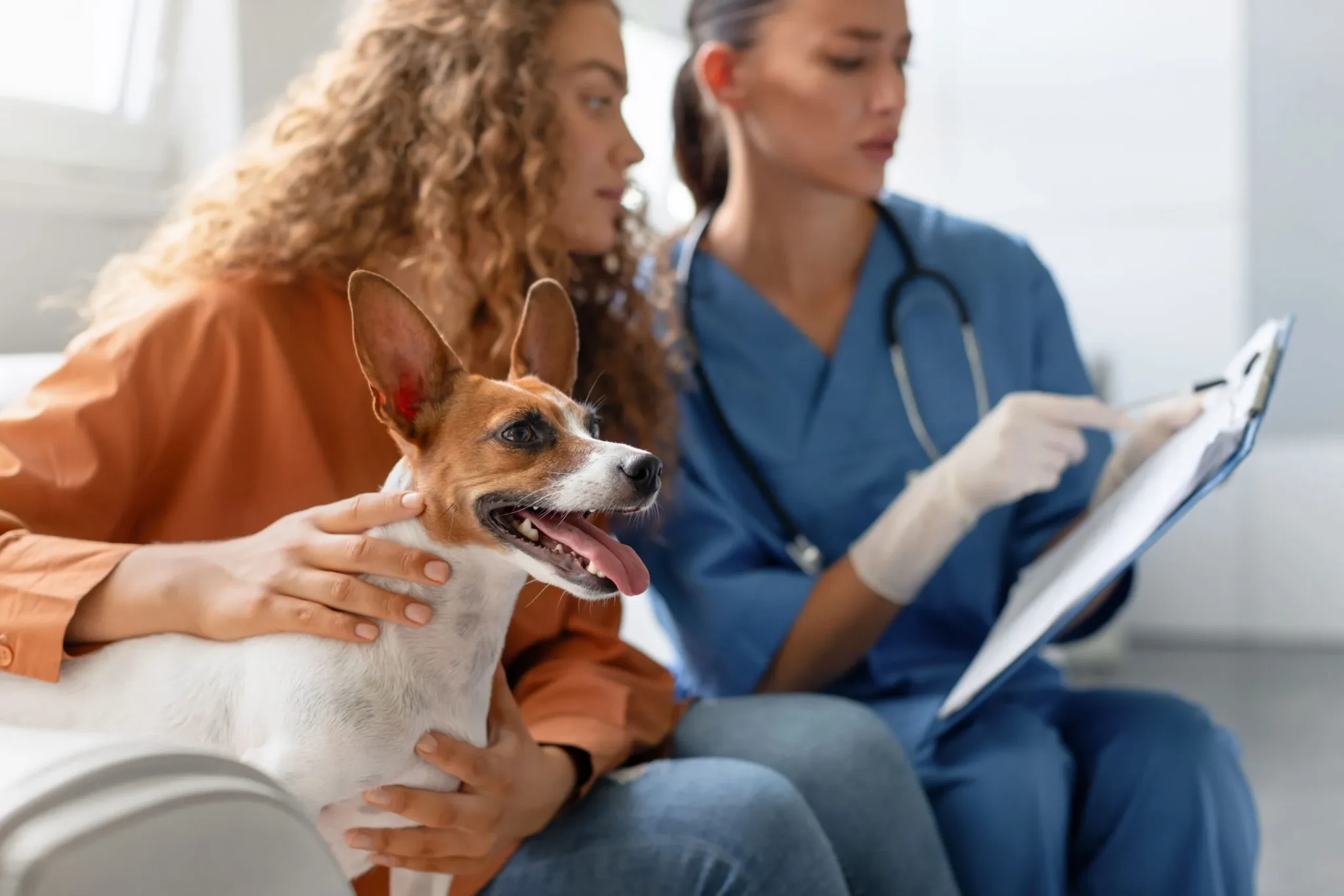
Yesterday morning looked like any busy GCC clinic: a cat with over-grooming, a German Shepherd with an intermittent limp, then a rabbit with gut trouble. Three species. Three clinical logics. One default note template that fits none of them.
If your AI scribe treats every visit like a dog check-up, you lose time, clarity, and sometimes safety. This guide gives you a simple two-week pilot checklist to see whether a veterinary AI scribe actually helps your clinic, and the two outcomes that matter. No buzzwords. No feature theatre. Just what works in real multispecies practice.
Why “Works in the Demo” Falls Apart in Real Clinics
Most software demos look clean. Real clinics do not.
You’re dealing with different species, conversations switching between languages, constant background noise, and a front desk that needs crystal-clear discharge notes or the phone won’t stop ringing later. In everyday clinic life, the same problems keep surfacing.
- Notes that read like a long narrative → slow handover
- Owner instructions buried in paragraphs → callbacks
- Templates built mainly for dogs and cats → exotics get pushed into “other”
- Audio systems that struggle with clinic noise or Arabic–English consults → missed details
The solution is not adding more features. It is record design that adapts automatically to species and clinical context.
What a Good Veterinary AI Scribe Actually Does
Instead of feature lists, look for practical behaviours that reduce workload.
- Species-adaptive notes. The note structure changes automatically, so a rabbit GI consult looks different from a feline dermatology visit or a canine orthopedics check.
- Top-line handover. Three quick lines at the top state the problem, what was done, and the immediate plan. You can read that in 15 seconds.
- Clear owner takeaway. Four items only: what we did, what to do at home, one red flag, and when to return. Offer a QR or SMS for the take-home instructions.
- Ambient capture. The system works in real clinic audio environments, including mixed language conversations.
- Minimal workflow change. Clinicians speak naturally and review a draft. They do not need to become technicians.
“Tools that require clinicians to change behaviour rarely survive busy practice conditions.”
The Smallest Change That Cuts Callbacks
Most evening calls aren’t emergencies. They’re confusion. One unclear instruction. One missed detail. One owner unsure what’s normal. That’s what drives callbacks.
A clear owner discharge summary prevents most of this. Every visit should leave the clinic with four things, no exceptions:
- What we did
- What to do at home
- One sign that means call us
- When to return
This small structure makes a big difference. Clarification calls drop quickly, the front desk workload eases, and clinicians spend less time repeating instructions.
The Handover Test Every Clinical Note Should Pass
Here’s a simple test I use in clinics. Open a patient record and don’t scroll. Just look at what’s visible first.
You should immediately see:
- The main problem
- What’s already been done
- The plan and follow-up
If you have to hunt through paragraphs to piece that together, the note isn’t supporting clinical flow. It’s slowing it down.
Good documentation helps the next clinician understand the case in seconds, not minutes. That’s what safe handovers look like in real practice.
How to Run a Real Clinic Pilot Without Disrupting Your Workflow
You don’t need a six-month rollout to know if this works. You need a short, honest pilot that reflects real clinic life.
Keep it simple. Keep it measurable.
Who’s involved
Three to five clinicians, ideally with mixed caseloads. You want dogs, cats, and the occasional exotic in the mix.
How long
Fourteen days is enough. By the end of week one, patterns start showing.
What must not change
Clinicians examine patients the way they always do. If the software only works when behaviour changes, it’s not a real solution.
Technical setup
Browser-based, live in under 15 minutes. If installation becomes a project, that’s a warning sign.
The only metrics that matter
- Notes finished before the next patient comes in
- Owner clarification calls later in the day
That’s it. No dashboards. No abstract productivity scores.
If both numbers move in the right direction within ten days, and clinicians keep using the tool without reminders, you’re looking at a genuine fit. If not, you’ve saved yourself from a long, expensive mistake.
Veterinary AI Scribe Comparison for Multispecies Clinics
After working with different veterinary AI scribes across real clinic environments over the past year, the differences became clear. Some tools are strong at transcription, some help with SOAP structure, and a few are designed around actual clinical workflow.
The table below reflects practical observations from day-to-day veterinary use rather than marketing feature lists. The focus is on how these systems behave in busy, multispecies clinics.
| Feature | Plato MedScribe | Scribenote | CoVet | Talkatoo |
|---|---|---|---|---|
| Built for veterinary medicine | Vet-first design | Vet-focused | Vet-focused | Used by vets, dictation origin |
| Multispecies note adaptation | Auto-structured by species | SOAP with species field | Structured notes, limited species logic | Generic transcription |
| Automatic SOAP note generation | Yes | Yes | Yes | Transcription then editing |
| Owner take-home summary | Built-in plain language and QR | manual edits | Emerging | Not native |
| Works in noisy rooms / mixed language | Designed for clinic audio | Strong audio capture | Good capture | Sensitive to noise |
| Minimal workflow change | Ambient capture | Natural speech handling | Some structure choices | Dictation workflow |
| PIMS export | Browser or API | Yes | Yes | Yes |
| Hardware for remote vet consultation | Dedicated kits available | None | None | None |
| Best fit | Multispecies clinics needing fast handover | Fast SOAP automation | Copilot-style documentation | Dictation support |
Quick FAQs
What is a veterinary AI scribe and how does it work?
A veterinary AI scribe listens during the consultation and converts the clinician–owner conversation into a structured medical note (SOAP or POMR) plus a plain-language owner discharge summary. Clinicians review and approve the draft, reducing typing while improving documentation consistency.
Are veterinary AI scribes accurate in real clinic settings?
Accuracy depends on audio quality, noise handling, and medical training data. Systems built for real clinic audio and regional dialects perform better than demo tools. Always run a live pilot in your own exam rooms before making a decision.
Do AI scribes work for exotics like rabbits and birds?
Some do, many don’t. Multispecies clinics should confirm the system adapts note structure for exotics, not just species labels. Ask vendors for real sample notes from rabbit, avian, or reptile cases.
How much time can a veterinary AI scribe save?
In multispecies GCC clinics, AI scribes often reclaim 30–75 minutes per clinician per day by drafting notes during visits and reducing owner clarification calls. Savings vary with caseload and documentation habits.
Do vets need to change how they examine patients?
No. Good veterinary AI scribes use ambient capture, allowing clinicians to speak naturally without dictation commands or template switching. The software adapts to the workflow.
Can AI scribes handle Arabic and English in one consultation?
Advanced systems support multilingual conversations and GCC dialects. Mixed-language consults should be tested during the pilot phase to ensure accuracy in real clinic conditions.
How do we know a pilot worked?
Success means more notes completed during the visit and fewer owner clarification calls later. If clinicians keep using the system without reminders, it’s a strong workflow fit.
Final thought
The goal isn’t smarter software. It’s quieter software.
The best veterinary AI scribe fades into the background. Clinicians don’t think about it, they just finish notes faster, handovers become easier, and the front desk gets fewer “quick question” calls at the end of the day.
That’s when you know documentation is finally supporting care instead of competing with it.
If you want to see what this looks like in a real clinic workflow, explore how Plato Tech’s clinical AI tools are used in multispecies practices across the GCC.