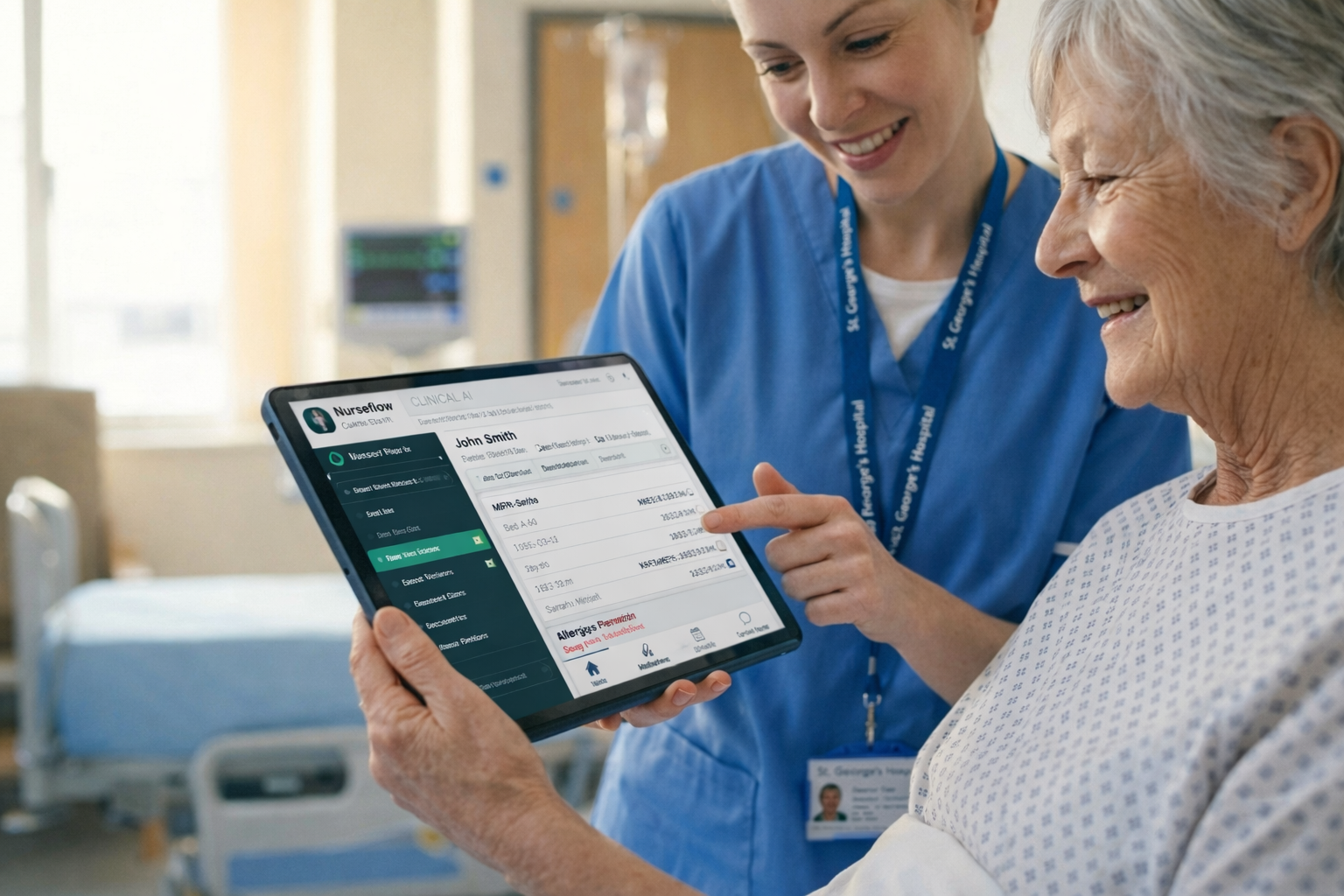
Nurses in the GCC spend up to 41% of their shift on EHRs and documentation. That's nearly half a shift spent typing, tapping, and scrolling instead of being at the bedside.
And yet, almost every "AI documentation" tool on the market was built for physicians. For visit-based conversations. For a workflow that looks nothing like nursing.
Here's the problem nobody talks about: nurses don't document like doctors. They document across dozens of micro-events: a medication pass, a wound check, a shift handoff, an admission assessment, a quick vitals update in the corridor. No single "ambient scribe" model solves this.
I spent six months piloting voice documentation tools with nursing teams across Dubai, Abu Dhabi, and Riyadh. Over 150 nurses. Five platforms. Here's what I found.
Why "AI Scribes" Fail Nurses in the GCC
Most AI documentation tools are ambient scribes: they listen to a doctor-patient conversation and produce a note. That works for a 15-minute clinic visit. It does not work for a nurse doing 30+ documentation events per shift.
GCC nursing teams face challenges that make this worse:
- Multilingual wards, not multilingual demos. A Filipino nurse documents in English, discusses care in Tagalog with a colleague, and communicates with the patient's family in Arabic. Standard medical dictation software collapses under this reality.
- Micro-events, not conversations. Nurses don't sit down for a consultation. They document on the move: between beds, after a med round, during a handoff. They need point-of-care documentation that captures structured data in 15 seconds, not a tool that needs a 10-minute conversation to produce a note.
- High-noise, high-stakes environments. ICU alarms. Paediatric wards. Busy emergency departments. Voice charting for nurses must filter noise reliably, not just in a quiet demo room.
- Strict regional compliance. SDAIA in Saudi Arabia, UAE Data Office regulations, and PDPL requirements demand data residency and sovereignty. A tool that stores audio on US servers won't pass procurement.
- Zero tolerance for workflow disruption. Nurses are already stretched thin. If a nursing documentation app requires training sessions, IT projects, or changes to how nurses work, it won't survive the first week.
The rule is simple: if a nurse has to think about the tool instead of the patient, it's already failed.
What Nurses Actually Need (vs. What Vendors Sell)
After piloting across 40+ nursing units, I can separate what matters from what's noise.
✓ What Matters
- Voice-first workflow completion. Not dictation. Not transcription. The nurse speaks, and the system navigates to the correct template, fills structured fields, and presents it for review. Speak, structure, verify, save.
- Structured, audit-ready outputs. Every entry must be timestamped, attributable, and coded to recognised standards. Regulatory bodies don't accept free-text dumps. They expect entries aligned to documentation principles: accurate, timely, sequential, and retrievable.
- Human-in-the-loop by design. AI drafts. The nurse reviews and signs off. Nothing is filed without explicit verification. This isn't a "nice feature." It's a non-negotiable for clinical safety and legal defensibility.
- True multilingual support. Handles Arabic (Gulf dialects), English, and code-switching without requiring nurses to slow down or repeat themselves.
- Regional compliance clarity. Explicit certifications for SDAIA, UAE PDPL, and data residency, not vague references to HIPAA.
✗ What Doesn't Matter
- "Ambient listening" for nurses. There's often no continuous conversation to capture. Nurses need task-triggered voice capture, not always-on recording.
- Feature overload. AI differentials, predictive analytics dashboards, 50-tab portals: none of this helps a nurse who needs to chart a med pass in 10 seconds between patients.
- "99% accuracy" marketing. Controlled-environment accuracy means nothing in a noisy GCC ward at 3am during Ramadan staffing.
Dictation vs. Scribing vs. Voice-First Workflow Completion
This distinction matters more than any feature comparison. Most vendors blur these categories deliberately.
| Approach | What It Does | Nursing Reality |
|---|---|---|
| Dictation | Speech-to-text into a blank field | Nurse still does all the structuring, formatting, and filing. Saves typing, that's it. |
| Ambient Scribing | Listens to a conversation, generates a note | Built for doctor visits, not nursing micro-events. Doesn't handle meds, wounds, handoffs, or admissions well. |
| Voice-First Workflow Completion | Nurse intent, correct screen, correct template, structured capture, verify, sign/save | Eliminates tapping, scrolling, and searching. Reduces total interaction cost, not just typing time. |
The gap is enormous. Dictation saves typing. Scribing saves note-writing. Voice-first workflow completion saves the entire documentation workflow: navigate, capture, structure, verify, and file.
What This Looks Like in Practice
Let me walk through what a real shift looks like when the tool actually works, based on what we observed during GCC pilots:
07:00: Morning vitals round. The nurse finishes taking vitals for a hypertensive patient. Instead of navigating to the vitals screen, searching for the right fields, and typing BP, heart rate, temperature, SpO2, respiratory rate, and pain score into six separate boxes, she taps the voice button and says: "Vitals for Smith: BP 138 over 88, heart rate 72, temp 36.8, SpO2 97, respiratory rate 16, pain 2 out of 10." The system populates all six structured fields. She reviews the card, confirms, and moves to the next bed. Fifteen seconds.
08:00: Medication administration. The patient has three active medications: Amlodipine, Metoprolol, and Aspirin. The system surfaces his Penicillin and Sulfa drug allergies as a prominent warning before administration. The nurse administers, confirms by voice, and each medication gets a timestamped checkmark. No manual logging. No missed entries.
10:00: Care plan tasks. The patient's care plan shows seven scheduled tasks for the day: morning hygiene, dietary assessment, afternoon vitals, evening medication round, and more. Each task has a time slot and category tag. As the nurse completes morning hygiene and ambulation, she adds a quick voice completion note and the task moves from pending to completed with her name and timestamp automatically attached.
11:30: Clinical notes. After a brief patient interaction, the nurse uses the AI scribe to dictate a clinical note: "Patient cooperative. Reports mild chest discomfort in morning." The note is drafted, she reviews and taps save. Timestamped. Attributable. Done.
13:00: Wound assessment. A wound check that would normally mean navigating to a separate system, finding the right form, and typing structured descriptions: handled by voice with structured fields pre-populated for review.
19:00: Shift handoff. Every documented event from the shift (vitals readings with full history, medication administrations, care plan completions, clinical notes, wound updates, any incidents) is already structured, timestamped, and filed. The incoming nurse opens the patient overview and sees everything at a glance. No verbal-only handoff. No missing context.
This is what "voice-first workflow completion" means in practice. Not a single feature, but an entire shift where documentation happens during care, not after it.
How Leading Platforms Compare for GCC Nursing Teams
Here's an honest comparison based on actual pilot testing across GCC nursing units:
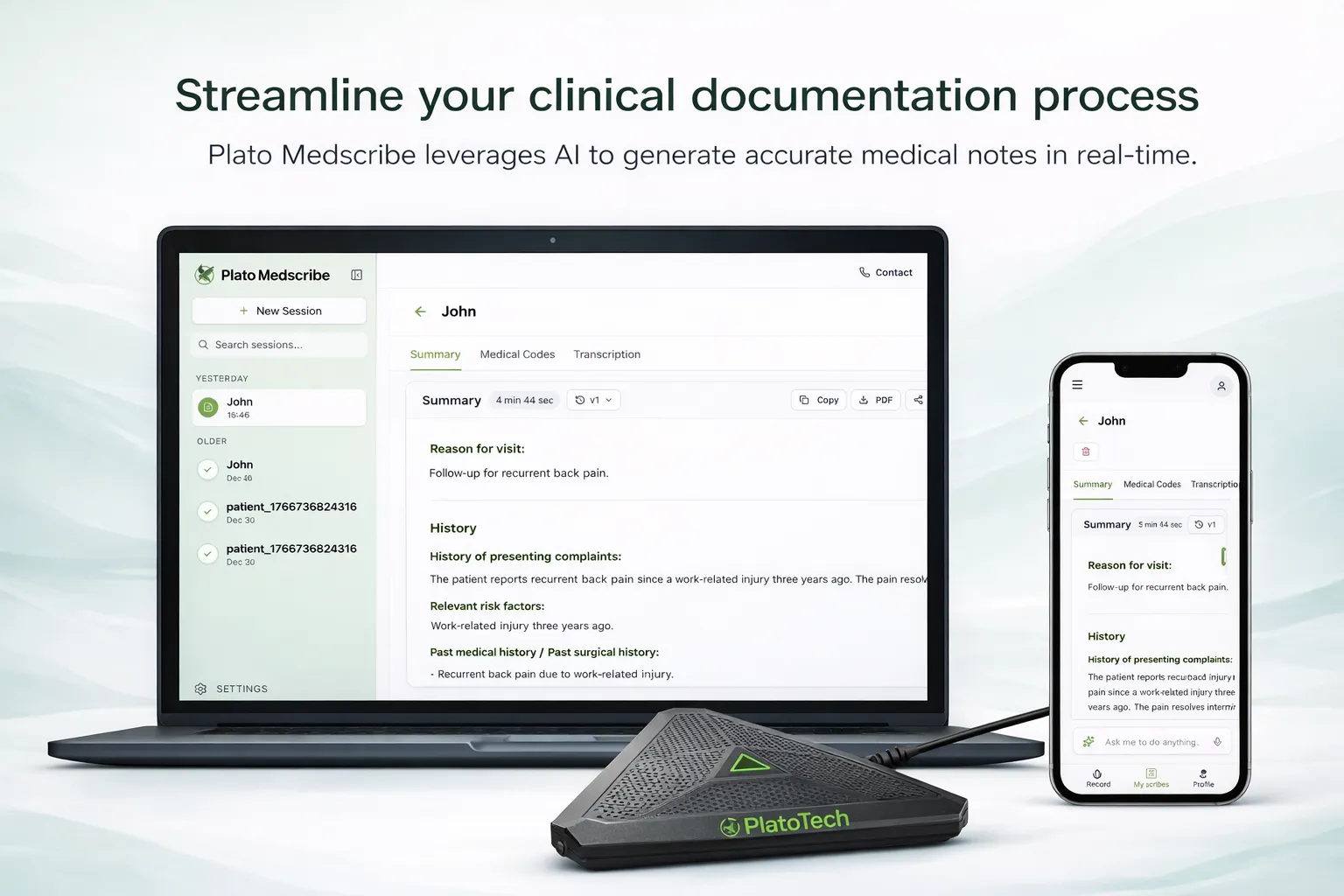
Key takeaway: Most platforms are physician-first tools with nursing bolted on. For GCC nursing teams needing Arabic support, voice navigation across nursing workflows, and regional compliance, Plato NurseScribe is built for this reality from the ground up.
How to Pilot Voice-First Nursing Documentation Safely
Here's the approach I recommend to Directors of Nursing and hospital administrators:
- Start with one unit, five nurses, two weeks. Pick a high-documentation unit, medical-surgical or ICU. Don't attempt an enterprise rollout until you have proof.
- Zero IT involvement on day one. If setup takes longer than 5 minutes per nurse, you're using the wrong tool. The best nursing documentation software works immediately: no integration projects, no training workshops.
- No workflow changes. Nurses document exactly as they normally would. The tool adapts to their rhythm (med rounds, handoffs, wound checks), not the other way around.
- Measure one thing: how much earlier do nurses finish charting? Forget feature usage, login frequency, or dashboard analytics. The only metric that matters is time reclaimed. GCC pilots consistently show 30-45 minutes saved per shift when the tool actually works.
- Decide by day 14. If it's not obviously reducing end-of-shift catch-up documentation by day 10, move on.
Frequently Asked Questions
How is this different from the AI scribes doctors are using?
Physician AI scribes capture a conversation and produce a visit note. Nursing documentation happens across frequent micro-events: meds, vitals, observations, handoffs. Voice-first workflow completion handles task-by-task structured capture, not conversation transcription.
Will AI documentation introduce errors into patient records?
Not if the system is designed correctly. Plato NurseScribe drafts structured entries from voice input, then presents them for nurse review before anything is saved. The nurse always verifies. Always signs off. The AI assists, it doesn't file.
Can this integrate with our existing EHR?
Yes. In the GCC where Epic, Cerner, Meditech, and regional systems coexist, flexibility matters. Look for platforms that export structured data via standard formats rather than requiring deep single-vendor integration.
What about patient data privacy in the GCC?
Demand explicit answers on three points: Where is data stored? (Must be GCC-resident.) Who can access it? (Role-based controls, encryption at rest and in transit.) Is audio retained? (It shouldn't be, or there must be clear opt-out.) Vague HIPAA references are not sufficient for GCC procurement.
How do we get buy-in from nurses who are skeptical of new technology?
By making the tool invisible. The fastest path to adoption is a system that requires no training, no behaviour change, and no new screens to learn. When a nurse finishes a med round, speaks for 10 seconds, reviews a structured entry, and taps save, buy-in happens on its own.
The Real Metric That Matters
After piloting every major approach to AI nursing documentation across the GCC, one insight stands out above everything else:
The best voice documentation tool for nurses isn't the one with the most features. It's the one that lets nurses finish charting before their shift ends and go home.
When end-of-shift catch-up disappears, when documentation happens at the bedside instead of at a desk two hours after the event, when the record is structured and audit-ready without extra effort: that's when you know you've found the right tool.
Your nurses already know what good care looks like. Give them a documentation system that gets out of the way and lets them deliver it.
See What 5 Minutes of Setup Can Do
Over 50 GCC clinics are already piloting Plato NurseScribe with their nursing teams: no contracts, no IT projects, no risk. If your nurses are still charting after their shift ends, it might be worth seeing what 5 minutes of setup and a 14-day pilot can do.
Start Your 14-Day Nursing Pilot