Real-Time Diagnostic Support
That Goes Beyond Documentation
MedAssist is the next evolution in clinical AI. An in-consultation diagnostic assistant that listens to patient talks and delivers evidence-based diagnostic suggestions while you're still in the room.

Join 100+ leading hospitals for our pilot program. Powered by the same government-backed AI as MedScribe. Built for institutions ready to lead in diagnostic safety.
The Next Frontier Beyond AI Scribes
AI medical transcription saves time. MedAssist saves lives.
While ambient scribes handle your documentation, MedAssist tackles the harder problem: diagnostic uncertainty. It surfaces missed differentials, flags red flags, and retrieves evidence-based guidelines — all in real time, while your patient is still in front of you.
For hospitals that want to do more than just automate paperwork.
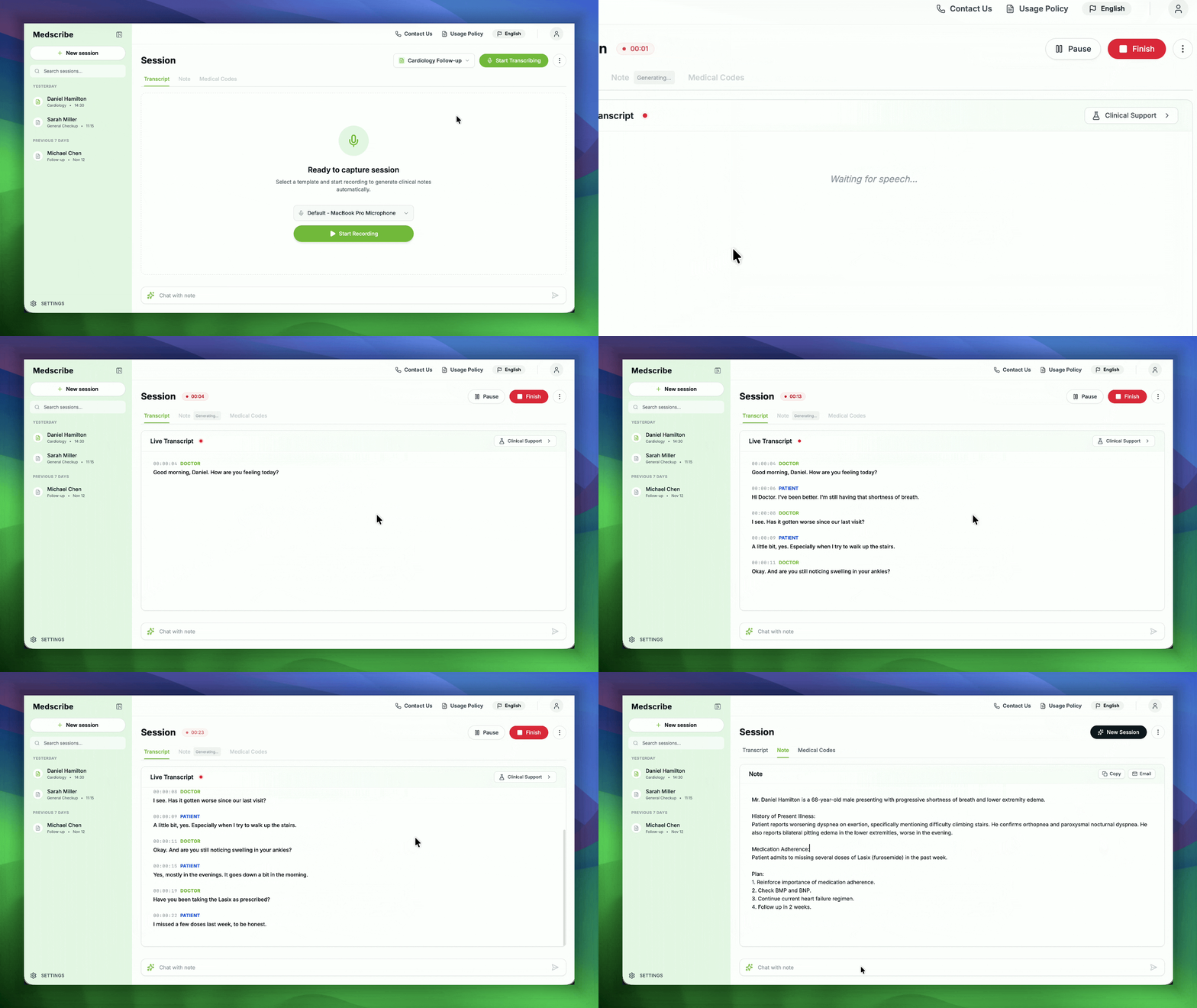
What MedAssist Does
Ambient Diagnostic Reasoning

Measured, Not Promised
Reduce Diagnostic Error Risk
Real-time differential suggestions help clinicians catch what they might have missed. Pilot sites will measure diagnostic accuracy improvements through structured chart review.
Lower Cognitive Burden for Clinical Staff
Stop asking doctors to memorize every guideline update. MedAssist retrieves the evidence while they focus on the patient.
Increase Clinical Decision Confidence
Every suggestion includes transparent reasoning and citations — so clinicians independently verify and make informed decisions, not blind ones.
Designed for Clinical Workflows
One-Click Patient Context
Launch from your EHR. MedAssist instantly pulls relevant patient data — meds, allergies, labs, history — via FHIR integration.
Ambient Clinical Listening
Start the consultation. MedAssist listens and structures the encounter into a live clinical summary as you talk.
Real-Time Diagnostic Support
Review differential diagnoses, red flag alerts, and next-step recommendations — all linked to evidence sources. You decide what to act on.
Security That Hospital CISOs Demand
Enterprise-grade encryption. Immutable audit logs. Data residency guarantees. Zero patient audio retention (configurable).



Who Should Join the Pilot Program
Pilot Program Benefits: Limited Availability
Only 200 hospital systems will be accepted into the 2026 pilot program.
Your Questions, Answered
Find clear, quick answers about AI diagnostic decision support.

Join the DiagnosticSafety Revolution
This is not for every hospital. This is for Chief Medical Officers who want measurable diagnostic outcomes. For IT Directors who value standards-based integration over vendor lock-in. For clinicians who know that documentation alone isn't enough.
Limited to 200 pioneering institutions.