The healthcare AI industry has spent billions perfecting ambient scribes for physicians. Record the conversation, generate a note, save the doctor 10 minutes. It works.
Now they're coming for nursing. And they're getting it completely wrong.
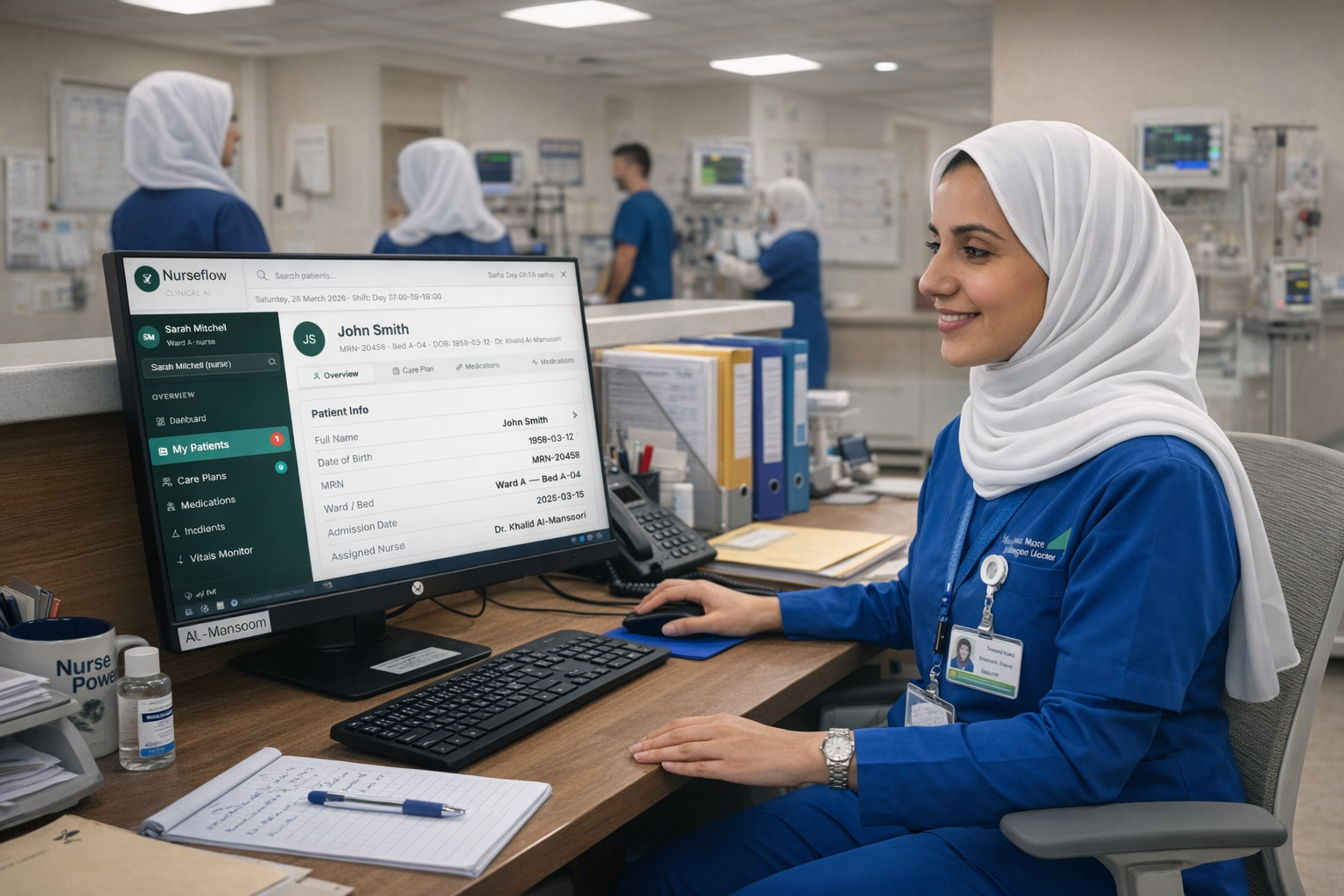
Nurses don't have a transcription problem. They have a workflow problem. Documentation happens across 30+ micro-events per shift: vitals, medications, wound checks, care plan tasks, incident reports, handoffs. There's rarely a "conversation" to transcribe. There's a medication round that needs six structured fields filled in 15 seconds before moving to the next bed.
I've spent the past year testing AI documentation platforms with over 200 nurses across the UK, Germany, the UAE, and the US. The conclusion is uncomfortable for most vendors: the tool nurses need doesn't exist in the "AI scribe" category at all.
It exists in a category most of the market hasn't built yet: voice-first workflow completion.
The Category Problem: Scribes vs. Workflow Tools
Before evaluating any platform, nursing leaders need to understand that three fundamentally different products are being sold under the same "AI documentation" umbrella.
| Category | How It Works | What It Solves | What It Doesn't Solve |
|---|---|---|---|
| Dictation | Nurse speaks, text appears in a field | Typing speed | Structuring, formatting, navigating screens, filing |
| Ambient Scribing | Microphone records a conversation, AI generates a note | Physician visit note creation | Nursing micro-events (meds, vitals, wounds, handoffs). There's no conversation to capture |
| Voice-First Workflow Completion | Nurse speaks intent, system navigates to correct screen, populates structured fields, nurse verifies, saves | The entire documentation workflow: navigate, capture, structure, verify, file | Nothing. This is the complete chain |
This distinction isn't academic. It's the reason 80% of AI documentation pilots fail in nursing units. The tool was built for the wrong job.
The Five Workflows That Break Every Ambient Scribe
If an AI documentation tool can't handle these five nursing workflows natively, it wasn't built for nurses regardless of what the marketing page says.
1. Vitals Documentation
A nurse takes vitals and needs six structured values entered: blood pressure, heart rate, temperature, SpO2, respiratory rate, and pain score. With a well-designed voice-first tool, she says "BP 138 over 88, heart rate 72, temp 36.8, SpO2 97, resp rate 16, pain 2 out of 10" and the system populates six structured fields in a clean card layout, ready for review. An ambient scribe would need a conversation to listen to. There isn't one. Dictation would dump unstructured text into a single field. Neither works.
2. Medication Administration
The nurse has three medications to administer: Amlodipine, Metoprolol, Aspirin. Before she touches anything, the system should surface the patient's allergy flags (Penicillin, Sulfa drugs) as a prominent, unmissable warning. As she administers each medication, a voice confirmation creates a timestamped record. No manual logging, no missed entries, no end-of-shift catch-up to reconstruct what was given and when.
3. Care Plan Task Tracking
A patient's daily care plan might include seven tasks: morning hygiene, dietary assessment, afternoon vitals, evening medication round, night handover prep. Each has a scheduled time and a category tag. The right tool lets a nurse complete a task, add a voice note ("BP elevated slightly"), and move it from pending to completed with her name and timestamp attached automatically. Ambient scribes don't even have a concept of "care plan tasks."
4. Wound Documentation
Wound assessments require structured, standardised entries: size, depth, tissue type, exudate, surrounding skin condition. Voice-first capture with pre-populated structured fields turns a 5-minute form-filling exercise into a 30-second voice entry with nurse review. Dictation into a free-text field produces notes that are nearly useless for audit or continuity.
5. Shift Handoff
This is where everything comes together. If the previous four workflows produced structured, timestamped, attributable entries throughout the shift, handoff becomes effortless: the incoming nurse opens a single patient dashboard and sees the full picture. Demographics, latest vitals, allergy flags, today's care plan status, active medications, clinical notes, wound updates, incidents. No verbal-only handoff. No missing context. No "I think the day nurse said something about..."
If a platform can't demonstrate all five of these workflows working with voice, it's a physician tool with a nursing label.
What a Nurse-First Platform Actually Looks Like
Based on a year of evaluations, here's the architecture that actually works for nursing teams. Not a feature wishlist, but the minimum viable system:
- A unified patient view. One screen showing patient demographics, latest vitals at a glance, allergy warnings, today's action plan, active medications, and quick access to every documentation type: wounds, incidents, notes. Context-switching between five different screens is where documentation time disappears. Eliminate it.
- A contextual voice button. The voice interface must adapt to where the nurse is in the workflow. On the vitals screen, it expects vitals input. On the medications screen, it expects administration confirmations. On the notes screen, it accepts free-form clinical narratives. One button, context-aware behaviour.
- Structured outputs by default. Every voice entry produces structured, coded, timestamped data, not paragraphs of free text. This is what makes entries audit-ready, handoff-ready, and interoperable with EHR systems. Documentation principles require entries that are accurate, attributable, timely, and retrievable. Free text fails this test.
- Human verification as the default. AI drafts. Nurse reviews. Nothing saves without sign-off. This is non-negotiable. Regulators explicitly flag AI hallucination risks in healthcare, and professional standards require authenticated, verified entries.
How Leading Platforms Compare
An honest comparison based on pilot testing with nursing teams across multiple regions:
Key takeaway: The comparison table isn't really about features. It's about category. Most platforms are physician ambient scribes being repositioned for nursing. Plato NurseScribe is built from the ground up as a voice-first nursing workflow tool. That's a fundamentally different product.
The Buyer's Checklist: 7 Questions Before You Pilot
Before signing any contract or starting any pilot, nursing leadership should ask:
- 1. Can you show me all five core nursing workflows (vitals, meds, wounds, care plans, and handoff) working with voice? If the demo only shows clinical note dictation, it's a physician tool.
- 2. Does the nurse verify every entry before it's saved? If the answer involves qualifications or caveats, walk away.
- 3. What happens in a noisy environment? Ask for a demo in a real ward, not a conference room.
- 4. What structured outputs does it produce? Free text isn't audit-ready. You need timestamped, attributable, coded entries.
- 5. What's the setup time per nurse? If it's more than 5 minutes, adoption will stall. The best tools work on the first shift.
- 6. Where is patient data stored and processed? Demand explicit answers on GDPR compliance, data residency, and whether audio is retained. Vague assurances aren't sufficient for healthcare procurement.
- 7. What does the pilot cost and what's the exit? No long-term contracts before proof of concept. Two weeks, one unit, five nurses. Measure time saved, not features used.
The Real Metric That Matters
After evaluating every major approach to AI nursing documentation, one insight stands above everything:
The best documentation tool for nurses isn't the smartest. It's the one that makes end-of-shift catch-up charting disappear.
When documentation happens at the bedside instead of at a desk hours later, when every entry is structured and audit-ready without extra effort, when the incoming shift nurse opens a patient dashboard and has the complete picture: that's when you know you've found the right tool.
Your nurses already know what excellent care looks like. Give them a documentation system that gets out of the way and lets them deliver it.
See What 5 Minutes of Setup Can Do
Nursing teams across 50+ hospitals and care facilities are already piloting Plato NurseScribe. No long-term contracts, no IT projects, no risk. If your nurses are still charting after their shift ends, it might be worth seeing what 5 minutes of setup and a 14-day pilot can do.
Start Your 14-Day Nursing Pilot